Qu\'est-ce que tu cherches?

-
+8619376997331(Temps de travail)
-
summer@chinaxingheda.com(Envoyez-nous un email)
Qu\'est-ce que tu cherches?
+8619376997331(Temps de travail)
summer@chinaxingheda.com(Envoyez-nous un email)
For telecom operators, system integrators and spare parts suppliers working with Nokia AirScale BBU, the AMIA subrack ecosystem is built on a set of complementary pluggable boards. Many buyers get confused when sourcing control and capacity cards, mixing up ASIB, ABIA, ABIO, ASIA because all of them fit into the AMIA shelf but carry completely different roles. Today we focus on Nokia ASIB (473764A), the AirScale System Integration Board, and clarify how it works with its peer modules.
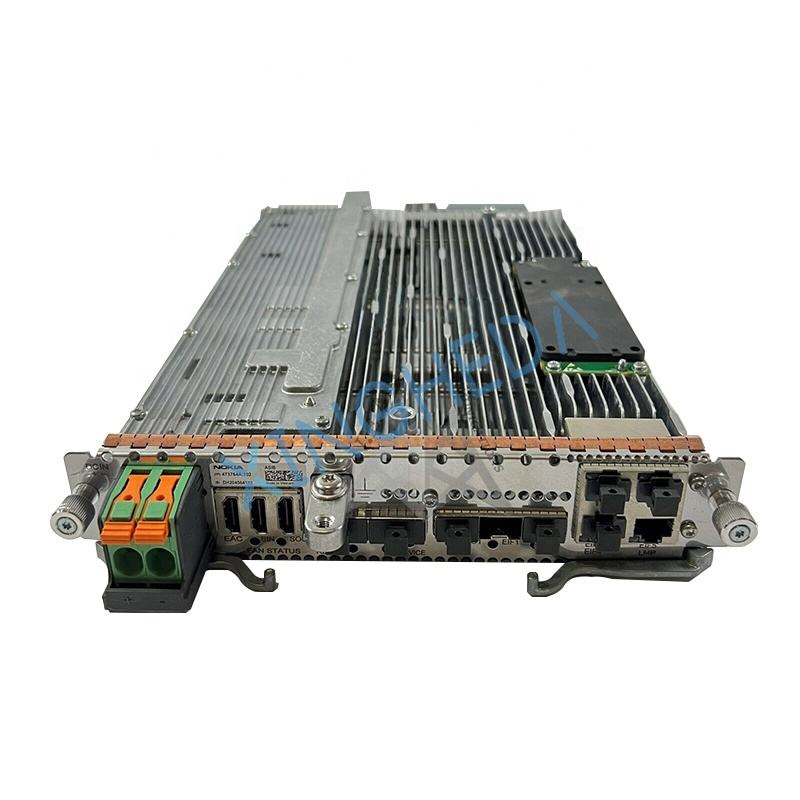
ASIB 473764A is the central control and synchronization board installed in slot C1 or C2 of the Nokia AMIA subrack. It handles subrack-level OAM management, clock synchronization, internal switching, control-plane signaling, and backhaul interface coordination. Think of ASIB as the coordinator of the whole AMIA chassis: it does not process user-plane baseband data itself, but it makes sure all capacity boards inside the same subrack can boot, communicate and run 2G/3G/LTE/5G NR SingleRAN services properly.
To fully understand ASIB, it helps to map it against the other popular AirScale boards you will often source together:
A typical working AMIA setup usually requires at least one control board (ASIB or ASIA) paired with one or more capacity boards (ABIA / ABIO). You cannot rely only on ASIB to carry subscriber traffic; likewise, ABIA or ABIO will not run without a functional control integration board in the subrack. This is one of the most common mistakes in spare part procurement and on-site replacement.
Refurbished, fully tested Nokia ASIB 473764A is a high-demand spare for network maintenance, site swap-outs and private 5G deployments. It supports hot-swap maintenance in compatible software releases, helping operators reduce site downtime and cut the total cost of running legacy and modern AirScale RAN networks.
A: ASIB and ASIA are control/ integration boards. ASIB (473764A) is the newer AirScale System Integration Board for AMIA OAM, clock and inter-board signaling; ASIA is the previous generation control card. ABIA and ABIO are user-plane capacity boards that handle baseband signal processing, cell throughput and end-user data. ASIB/ASIA are mandatory for subrack management, while ABIA/ABIO deliver the actual radio capacity.
A: Not always. Hardware compatibility depends on the AirScale software release running on your site. Some older software versions do not support ASIB, while newer releases support a migration from ASIA to ASIB. Always check Nokia’s release compatibility matrix before replacement, and confirm the hardware revision (such as 473764A.102) matches your deployment.
A: No. ABIA and ABIO are pure capacity boards. Without a working control board (ASIB or ASIA) in the C1/C2 control slot, the AMIA subrack will fail to initialize, and the paired ABIA/ABIO cards cannot come into service. Operators often stock ASIB together with ABIA/ABIO spare kits for site outage response.
A: ASIB is designed for the dedicated control slots C1 and C2 of the AMIA subrack. The C slots are reserved for control integration boards, while the remaining slots are for capacity boards like ABIA and ABIO. It supports 1+1 redundant control configuration when two ASIB cards are fitted.
A: No. ASIB manages the control plane and system coordination, but the maximum 5G throughput, cell count and concurrent users are determined by the ABIA or ABIO capacity boards. If you need higher 5G capacity, you upgrade or add ABIA/ABIO; if you have subrack boot, clock or OAM faults, you replace ASIB.
2506 Xidi Building, No. 8 Fenglin Third Road,Yuelu District, Changsha City, Hunan Province